Max Super Speciality Hospital, Wish Town, Sector - 128 NOIDA, U.P. - 201304

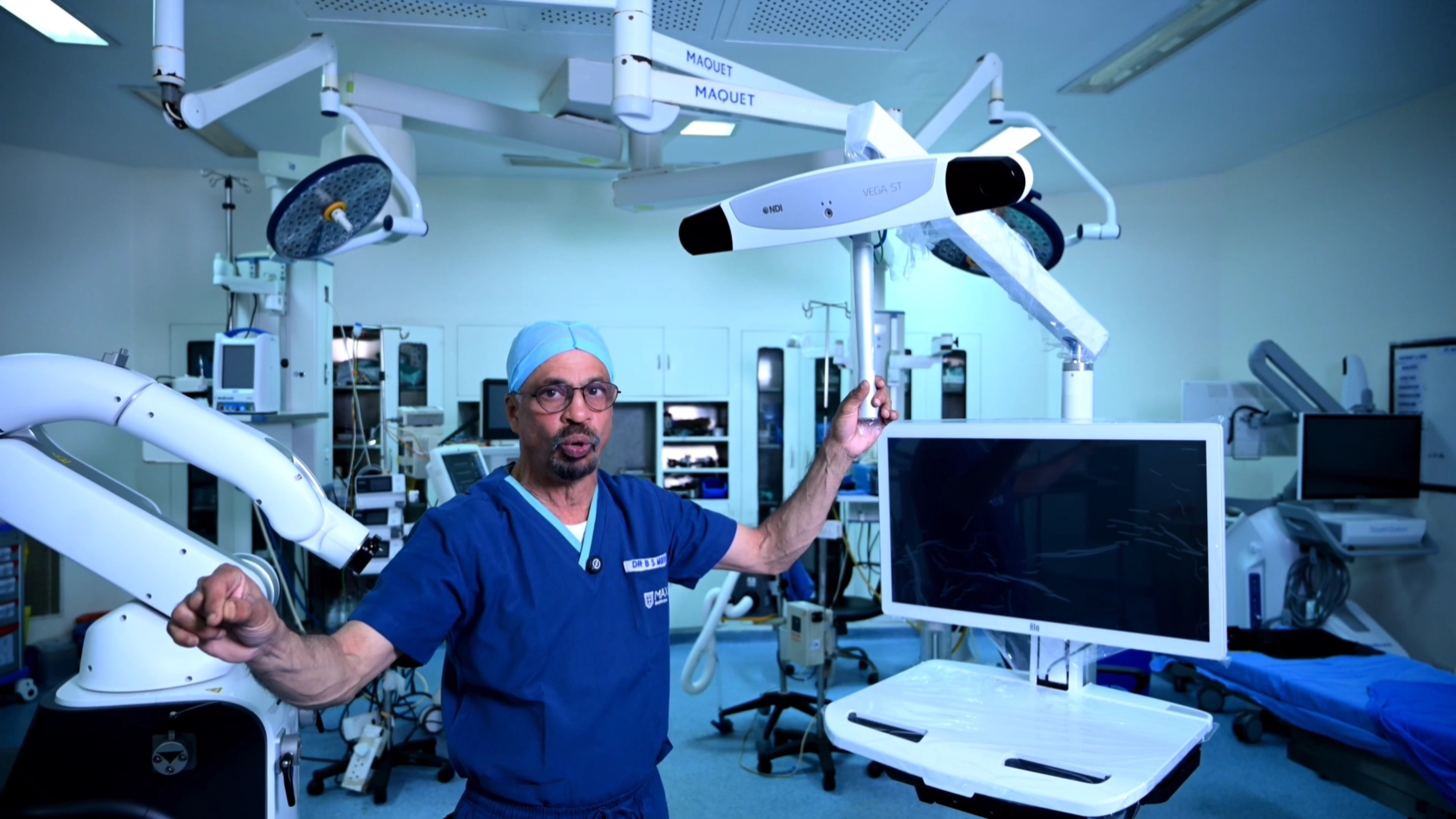
As explained by Dr (Prof) B S Murthy, robotic knee replacement is an advanced surgical procedure in which only the damaged part of the knee joint, especially the worn-out cartilage cap of the bone, is removed and replaced with a new artificial cap. This approach focuses on precision, personalization, and long-term functional outcomes.
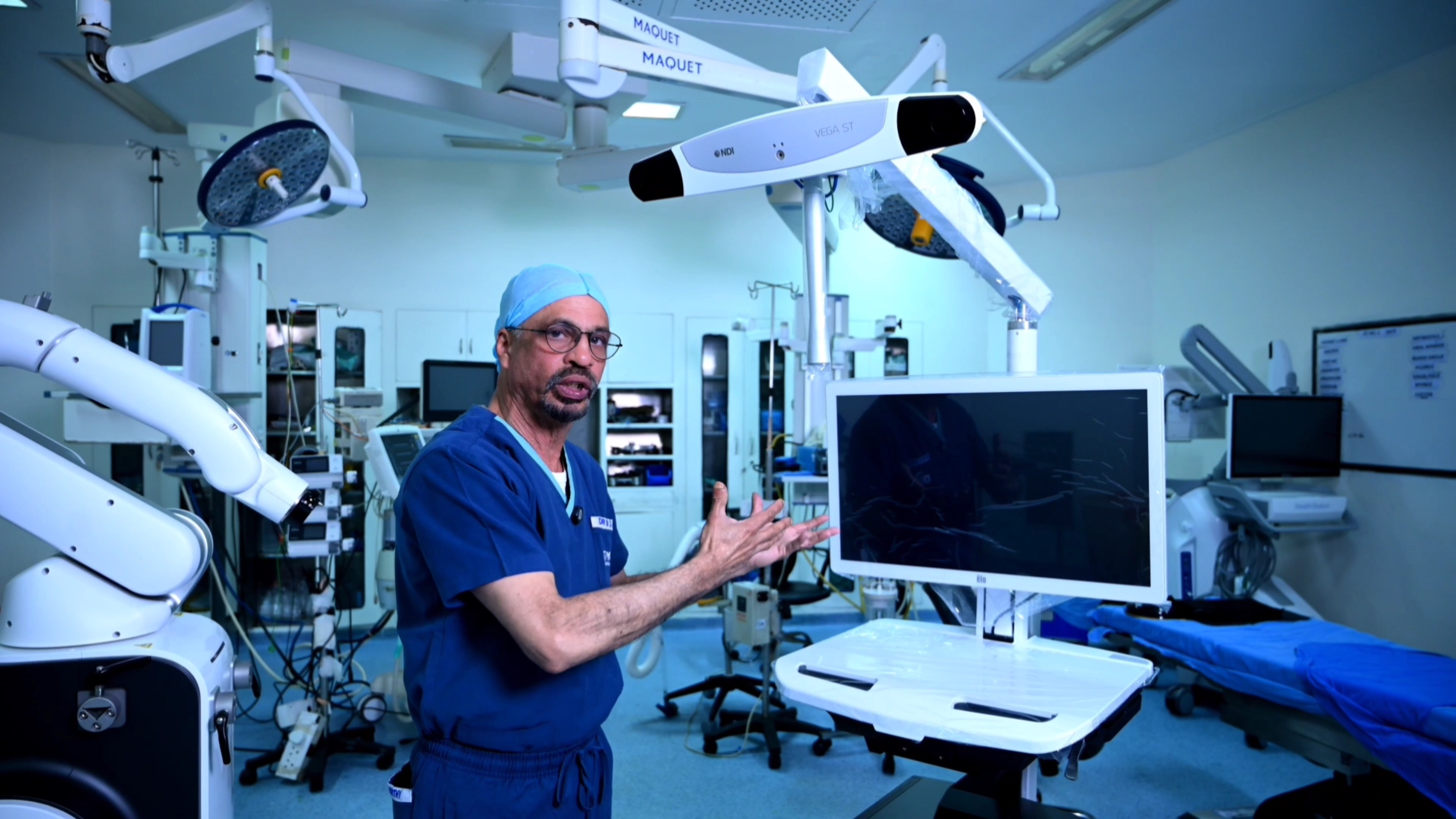
Dr (Prof) B S Murthy explains how robotic knee replacement works inside a real operation theatre, highlighting precision alignment, balance, CT scan planning, and functional knee movement using advanced robotic technology.
Dr (Prof) B S Murthy emphasizes that two factors are most important in knee replacement surgery:
According to Dr (Prof) B S Murthy, patients in India often sit cross-legged, squat, use Indian toilets, and bend their knees during daily activities and religious practices. During these movements, knee alignment can change.
To address this, Dr (Prof) B S Murthy uses the concept of functional alignment, where robotic knee replacement is customized based on different functional positions of the patient using robots and computer-assisted planning.
Dr (Prof) B S Murthy explains that detailed CT scan data of the patient is first collected and stored digitally.
The data is saved in a pen drive and laptop as backup
Segmentation and surgical planning are performed in advance
This data is then fed into the robotic system
This allows Dr (Prof) B S Murthy to correlate the CT scan findings with the patient’s real-time anatomy during surgery.
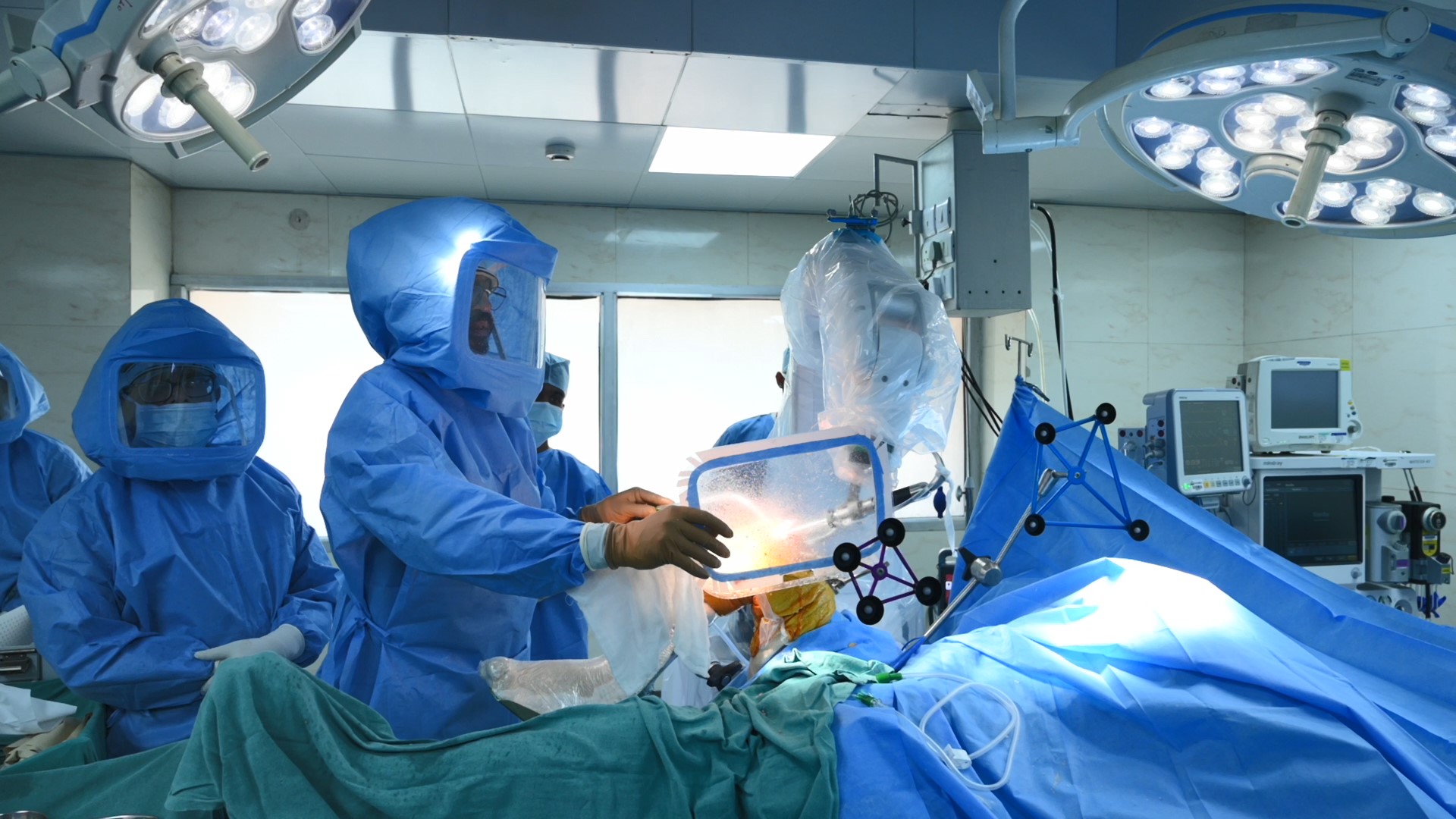
Inside the operation theatre, Dr (Prof) B S Murthy uses a robotic arm equipped with a movable cutting burr that performs highly precise bone cuts. The robot does not move beyond the pre-planned boundaries fed by Dr (Prof) B S Murthy, ensuring safety and surgical accuracy.
An infrared camera captures the real-time position of the patient’s exposed bone and sends live information to the surgical console. This console provides Dr (Prof) B S Murthy with an accurate real-time picture of the patient’s knee.
Dr (Prof) B S Murthy highlights that robotic knee replacement is not autonomous surgery. The surgeon’s brain, experience, and surgical skills play the most crucial role.
During the procedure, Dr (Prof) B S Murthy:
Matches real-time bone data with CT scan planning
Adjusts alignment and balance manually
Uses full control with a stop button for safety
Makes final surgical decisions based on precision data
As stated by Dr (Prof) B S Murthy, knee replacement is considered correct only when optimal balance and alignment are achieved. Robotic-assisted knee replacement helps him ensure:
Precise bone cutting
Personalized implant positioning
Functional alignment for daily activities
Improved mobility and potentially faster recovery
This combination of advanced robotic technology and the surgical expertise of Dr (Prof) B S Murthy aims to deliver safer, more accurate, and patient-specific knee replacement outcomes.